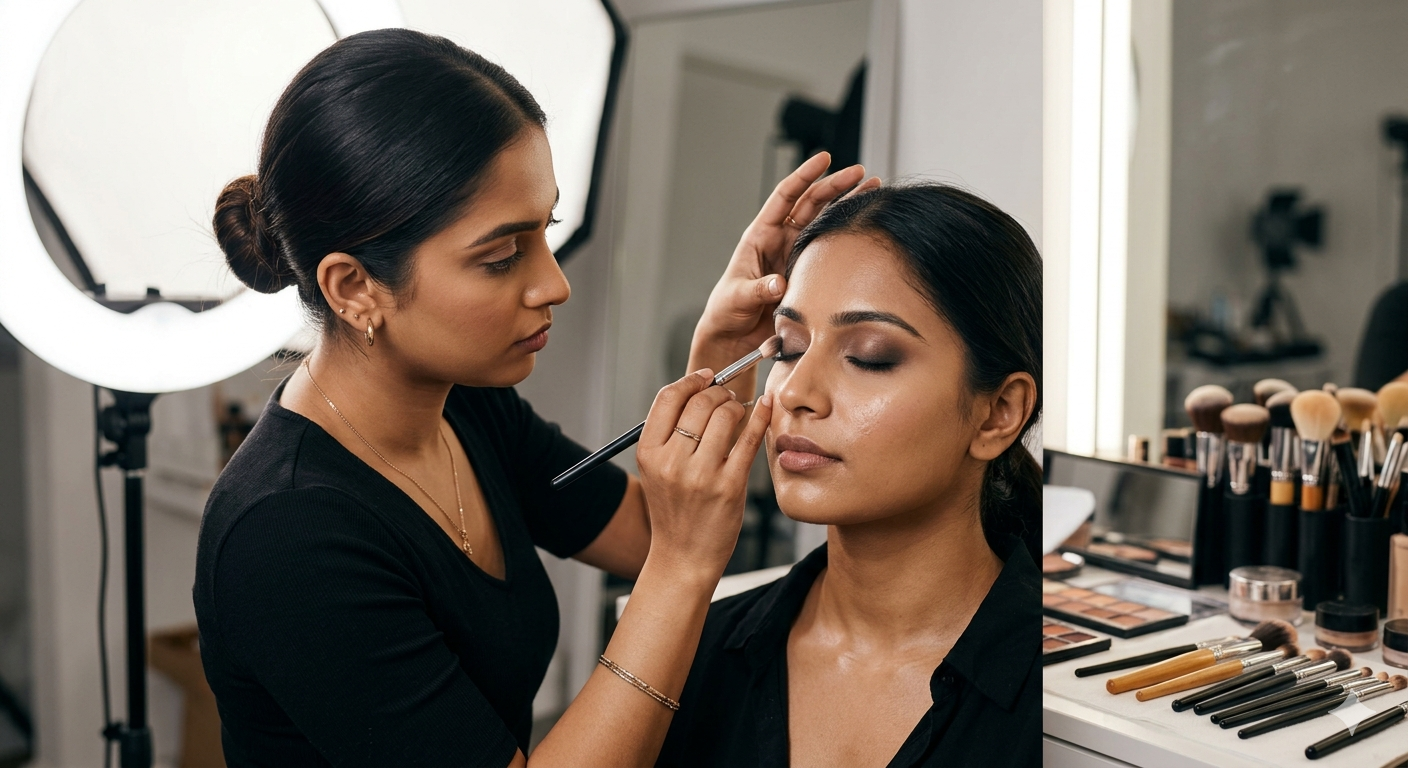
The 5am call time was the easy part. The hard part is the text you send four weeks later asking the bride's mother, again, about the balance for the four bridesmaids.
Makeup work has a billing problem most freelance trades do not. The service is delivered on one fixed, emotionally loaded day, often to a group, and often paid for by someone who was not standing in the room. By the time you are chasing, the event is over, the photos are posted, and the urgency has evaporated on their side while yours is still very much alive.
The fix is not a better follow-up text. It is invoicing in a way that puts most of the money on your side of the table before anyone gets in the chair.
Get the deposit right, because it is the whole game
For event work, a non-refundable retainer between 25% and 50% is standard, and it does two jobs at once. It compensates you for holding a date you can no longer sell, and it converts a casual enquiry into a real booking.
Call it a retainer rather than a deposit in your written terms. A retainer reserves your time. A deposit sounds like something people can ask back. Then be explicit about what happens if they cancel: retainer forfeited, no exceptions inside the cancellation window. Vague cancellation language is the single most expensive sentence in a makeup artist's paperwork.
The balance should be due before the event date, not on the day. Chasing an invoice while holding a lip brush is a losing position, and "we will settle up after" is how a $900 bridal party turns into a three month collections problem. Our guide on how to send a deposit invoice covers the mechanics of splitting a job into two payments cleanly.
Bill the trial as its own transaction
A trial is a separate service with its own line item and its own payment, collected at the trial. Charge it whether or not the booking converts.
Most artists price a trial at somewhere between half the event rate and the full event rate. Some credit it toward the total if the client books, which is a reasonable sales tool, but do not offer a free trial. A free trial is an unpaid two hour session plus product, plus travel, for someone who has committed nothing.
If the trial and the event are on the same invoice, you have told the client the trial is refundable. It is not.
Line items your invoice needs
Vague invoices get questioned. Specific invoices get paid. List every element separately:
- Bride or key talent at the individual rate
- Each additional face, itemised by count rather than lumped as "bridal party"
- Trial, with its date
- Travel, as mileage beyond your included radius or a flat zone fee
- Early start surcharge for call times before your standard hours
- Assistant fee if group size required one
- Touch-up or stay-on hours, billed hourly
- Airbrush, lashes, or specialty products if you charge them separately
Also record the event date, the venue address, and the call time on the invoice itself. When a question comes up eight months later, the invoice is the record that settles it. The freelance invoice elements checklist covers the rest of what belongs on every invoice you send.
Charge for travel honestly
Makeup artists routinely absorb travel because it feels awkward to bill for driving. It is not awkward. It is an hour of unpaid labour plus fuel plus parking, and on a hotel-suite bridal job it can be three hours.
Set an included radius, say 20 miles from your base. Beyond it, charge the current IRS standard mileage rate at minimum, and add a flat fee for parking or congestion zones. Put the radius in your booking terms so the travel line on the invoice is never a surprise.
Decide who the client actually is
On a bridal job, the person in your chair is often not the person paying. On editorial or commercial work, the payer is a production company with net 30 terms and an accounts inbox that has never heard of you.
Name the payer on the invoice, not the talent. Get their email, and if it is a company, ask early whether they need a purchase order number, because an invoice missing a PO will sit unpaid indefinitely and nobody will tell you why. For agency and production work, expect longer terms and price accordingly. Freelance payment terms explained breaks down which terms to offer to whom.
Keep records for the parts that are deductible
Your kit is a business expense, and it is a large one. Foundations, brushes, disposables, sanitiser, kit bags, and the replacement cycle on all of it. So are mileage, professional insurance, and the portion of your phone bill used for bookings.
Track these as you go rather than reconstructing them in April. The Freelancers Union has solid, plain-language guidance on self-employment record keeping if you are early in this.
A workflow that stops the chasing
Here is the sequence that removes almost all of the follow-up work:
- Enquiry. Send a proposal with services, per-face pricing, travel, and cancellation terms in writing.
- Acceptance. Client accepts, and the retainer invoice goes out the same moment. Date is not held until it is paid.
- Trial. Separate invoice, paid at the trial.
- Two weeks out. Balance invoice sends automatically, due before the event date.
- Event day. You do makeup. That is all you do.
The step most artists skip is the second one, because building an invoice manually right after a happy phone call feels like breaking the mood. So it waits, and then it waits some more. Automating that step is worth more than any pricing change you could make this year.
Frequently Asked Questions
How much deposit should a makeup artist take?
Between 25% and 50% of the total, non-refundable, taken at booking. For large bridal parties or dates in peak season, closer to 50% is normal because the opportunity cost of holding that date is higher.
Should I charge for a bridal trial?
Yes. Price it between half and the full event rate, and collect it at the trial. You can credit it toward the balance if they book, but never run it free.
When should the final balance be due?
Before the event date, typically 7 to 14 days out. Collecting on the day puts you in the worst possible negotiating position, and collecting after means chasing someone whose event has already happened.
How do I charge for travel to a venue?
Set an included radius, then bill mileage at the IRS standard rate beyond it, plus any parking or tolls. Put the radius in your terms before booking so it never reads as an add-on.
Do I need to invoice if the client pays cash?
Yes. Issue an invoice and mark it paid. It is your income record for tax, and it is your evidence if a dispute or chargeback ever surfaces.
What if the bridal party adds faces on the day?
Have a stated per-face rate in your terms and invoice the additions immediately after the event. Agree it in writing at booking so the day-of conversation is a confirmation rather than a negotiation.
Do the makeup. Let the invoicing run itself.
You are good at the part that requires being in the room. The retainer invoice, the balance reminder two weeks out, and the polite nudge if it goes unpaid do not require you at all.
Try Nvoyce free for 7 days. No credit card required. Send the proposal, and when the client accepts, the invoice and the follow-ups handle themselves.